Yesterday, UN member states wrapped up negotiations and gave the green light to the Compromiso de Sevilla, recommending it for formal adoption at the upcoming Fourth International Conference on Financing for Development (FFD4), which takes place in Seville in two weeks’ time (30 June 30 – 3 July). Adopted on 17 June, the new UN declaration outlines a renewed global framework for financing sustainable development.
CAFOD has closely followed these negotiations, standing alongside leading voices from the Global South and pushing for bold reforms to the global financial system—reforms that put the needs of the world’s most marginalised front and centre. While the final agreement doesn’t go far enough in key areas like climate finance, development cooperation and debt, we recognise the challenges of reaching consensus in multilateral settings. This outcome, while imperfect, is a step forward and could lay the groundwork for tackling the financing gaps many countries face and for reshaping the global financial architecture.
On development cooperation, we’re concerned that the agreed language lacks the urgency and ambition needed to address a crisis largely of our own making. With many wealthy nations cutting back on aid, millions are being left vulnerable to hunger, disease and poverty.
We believe lifting people out of poverty isn’t a political choice—it’s a moral responsibility and one long overdue. As Catholic Social Teaching reminds us, we are called to uphold the dignity of every person, to stand in solidarity with the poor, and to work for the common good. Inaction in the face of poverty is not just a policy failure—it is a failure of justice and compassion.
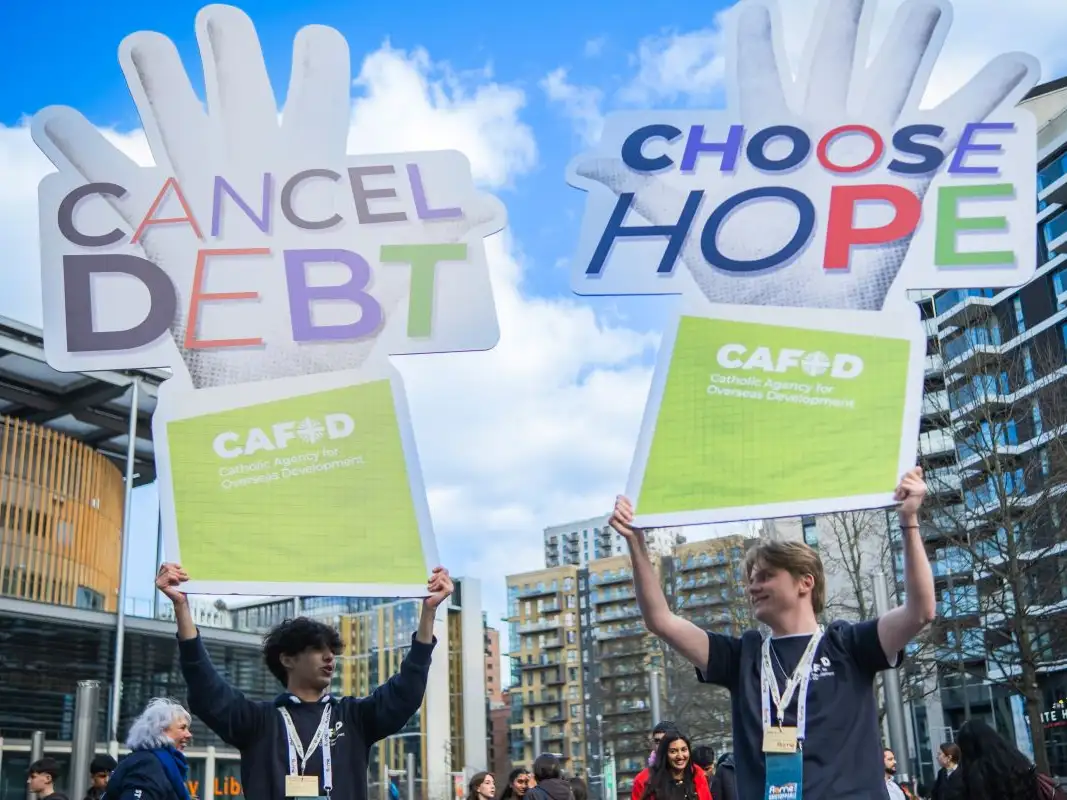
On debt, the final text falls short of what many Global South countries had hoped for. It leaves out any mention of a UN-led debt convention or a fair decision-making process that includes developing countries—key proposals championed by the African group.
Still, despite pushback from countries including the UK, EU and CANZ, negotiators managed to agree to initiate an intergovernmental process at the UN, to explore ways to fix the broken debt system. While the timeline remains vague, this is a positive move—it opens the door to deeper engagement and gives countries from the Global South a stronger voice in shaping solutions.