

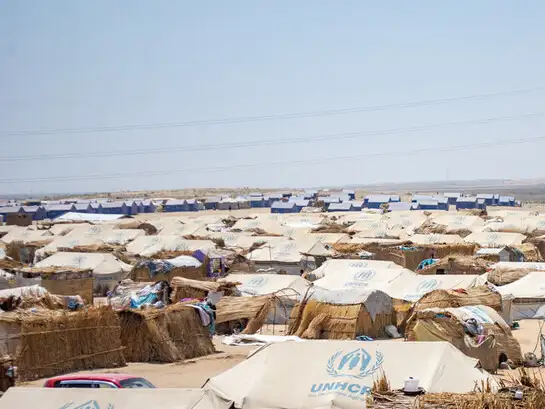
The crisis in Sudan has plunged the country into one of the world’s worst humanitarian crises.
On Tuesday 14 April, CAFOD (Catholic Agency for Overseas Development) and other leading charities will join Anneliese Dodds MP and Sudanese representatives in Downing Street to sound the alarm for Sudan. A group will deliver a 41,243-strong petition demanding action from the UK Government.
The level of human suffering affecting 33.7 million people in Sudan has reached unimaginable levels. As the country marks three years of brutal conflict, urgent action cannot wait any longer.
Anneliese Dodds MP, Chair of the All Party Parliamentary Group for Sudan and South Sudan, said:
“This situation has gone beyond catastrophe, and the people of Sudan can’t wait any longer. The UK Government must use its position as United Nations Security Council penholder to show the leadership this crisis demands. That means acting now to protect civilians and ensure aid reaches those in desperate need.”
Bishop Yunan Tombe Trille, from the Diocese of El Obeid in Sudan, issued a letter to mark the third anniversary of the conflict. In it, he honoured the suffering of millions and called for peace to be prioritised over political advantage:
“What began as a political and military struggle has grown into one of the world’s worst humanitarian crises. Millions have been displaced … communities once living side by side in peace now face hunger, fear, and uncertainty. Essential services such as schools, health facilities, and markets have been crippled. The rich social fabric of Sudan—woven from culture, faith, and diversity—has been deeply wounded.
“Peace in Sudan will not come through weapons or foreign interests, but through a deliberate, inclusive, and just process rooted in the dignity of every Sudanese person.”
CAFOD is one of only a few aid agencies now working in Sudan. Frontline workers have seen the horrors of war first-hand.
Children in Sudan are experiencing a severe malnutrition crisis. Millions of children under five are at risk of the deadliest levels of hunger, and time is running out. According to the United Nations, 4.2 million cases of acute malnutrition are expected in 2026 in Sudan, including more than 800,000 cases of severe acute malnutrition.
When three-year-old Maysoon’s family arrived at a camp for displaced people in Sudan, Community Nutrition Volunteers discovered she was severely malnourished. She was referred for life-saving care and received Ready-to-Use Therapeutic Food (RUTF), routine medications and weekly follow-up care.
Sara, from CAFOD Sudan, says:
“Within the first three weeks, Maysoon showed visible improvement — her appetite increased, she became more active, and her weight steadily improved. After 10 weeks of consistent treatment, she was discharged. Today, Maysoon is a healthy and playful child, demonstrating the life-saving impact of timely nutrition intervention.”
Her mother, who received counselling on hygiene, infant and young child feeding practices, and the importance of completing treatment visits, later commented: “For us, this is not just a project—it is saving lives.”
75% of women-led households are facing extreme hunger, and women and girls often eat last and least. Unimaginable levels of gender-based violence also mean that activities such as fetching water or standing in food lines carry heightened risks.
Eva Khair, from the Women4Sudan Campaign, a transnational Sudanese civil society initiative for justice and peace that works with CAFOD, said:
“Three years on, what we are hearing from colleagues and communities inside Sudan is not only of hunger, but of deliberate deprivation—where access to food, water and aid is being systematically obstructed. Women and girls are bearing the brunt, navigating starvation alongside extreme violence, yet still holding families and communities together against unimaginable odds.”
The petition, titled ‘Sudan can't wait: UK government must step up for Sudan’, demands that the UK Government urgently step up its action on Sudan. It asks the government to use all its diplomatic, political and economic influence to push for a ceasefire, protect civilians, secure safe and sustained humanitarian access, and urgently increase life-saving funding, before even more lives are lost.
For more information or interview requests, please contact:
Rosalind Mayfield, CAFOD Media Officer
Melissa Nethersole, CAFOD Media Officer
CAFOD’s out-of-hours media line
Since April 2023, the escalating conflict in Sudan has forced millions of people to flee their homes: over 9 million people have been displaced inside Sudan and an estimated 4.3 million are living as refugees in neighbouring countries, such as South Sudan or Egypt.
Over 150,000 people are estimated to have lost their lives and over 33 million people - more than half of Sudan's population - are in urgent need of humanitarian assistance.
CAFOD is the official aid agency of the Catholic Church in England and Wales, and part of Caritas Internationalis, working with communities across Africa, Asia, the Middle East and Latin America to fight poverty and injustice, including those worst hit by climate change. The agency works with people in need, regardless of race, gender, religion or nationality.
CAFOD is funded mainly by voluntary donations from people in the Catholic community of England and Wales. We also receive funding from fellow Catholic charities and development agencies, the DEC, trusts and foundations, and the UK and other governments.
Tuesday’s petition hand-in has been organised by 12 leading aid agencies that make up the #KeepEyesOnSudan coalition.
They are: Action Against Hunger, Age International, CARE International UK, CAFOD, Christian Aid, International Rescue Committee, Islamic Relief UK, Plan International UK, Save the Children UK, Tearfund, Oxfam, World Vision.
At a time when brothers furiously fight each other in our nation, for the first time in decades or even centuries Christians and Muslims began fasting on the same day - February 18th 2026. Together they celebrated, Eid al‑Fitr then Easter, on the anniversary of the three‑year conflict in Sudan. God is calling us for peace and unity. I wish all Sudanese a happy feast of Al‑Fitr and Easter.
The Christians celebrate this most important feast for us in the year. It is the resurrection of Christ who died on the cross, the Cross that carries the sin of humanity and reveals the deepest truth of God.
God’s love is stronger than hatred. God’s mercy is stronger than sin. God’s life is stronger than death. Even when surrounded by cruelty and injustice, Christ forgives and entrusts himself to the Father. We celebrate the Resurrection of Christ, transforming fear into joy, victory over sin and death. The message emphasises, Christ is alive, offering us new life, hope, and peace. It invites believers to leave behind our graves of fear, embrace faith, and set our minds on things above, looking upon life no longer through our eyes, but through the eyes of the One who broke through the terror of death and into a new way of being.
We celebrate this Easter marking three painful years since the eruption of the conflict in Sudan, a conflict that has devastated our people, scattered our families, destroyed our livelihoods, and shaken the very foundations of our nation. What began as a political and military struggle has unfolded into one of the world’s worst humanitarian crises. Millions have been displaced within Sudan and across borders. Communities once living side by side in peace now face hunger, fear, and uncertainty. Essential services—schools, health facilities, and markets—have been crippled. The social fabric of Sudan, rich in culture, faith, and diversity, has been deeply wounded.
The impact of this war is not measured only in statistics, but in the lives of mothers searching for food, children robbed of education, youth forced from their homes, and families mourning loved ones. It has strained the resilience of our churches, mosques, traditional leaders, humanitarian agencies, and every community struggling to keep hope alive. Yet despite all these hardships, the Sudanese spirit has not been extinguished. We celebrate new life risen from the dead. This is our Easter!
As we stand at this third anniversary, we are called not only to remember the suffering but also to renew our moral responsibility to advocate, to reconcile, and to rebuild. Peace in Sudan will not come through weapons or foreign interests, but through a deliberate, inclusive, and just process rooted in the dignity of every Sudanese person.
Hence, peace requires:
A sustained and unconditional ceasefire to end violence against civilians.
Humanitarian access to all regions without restriction, ensuring food, medicine, and protection reach the displaced and the vulnerable.
An inclusive national dialogue involving religious leaders, women, youth, civil society, traditional chiefs, and all marginalized communities.
Regional and international support that prioritizes peace, not political advantage.
Justice, truth, and accountability for the violations committed, so that healing is possible.
Long‑term reconstruction and reconciliation, empowering local communities to restore trust and rebuild social cohesion.
This anniversary is not only a reminder of what has been lost; it is also a call to action. Let us stand together, as Sudanese and as partners in humanity, to say enough of war, to work for a future where children can return to school, where families can return home, and where Sudan rises again as a nation of peace, dignity, and hope. Together we can.
Happy and blessed Easter and Eid al‑Fitr
† Rt. Rev. Yunan Tombe Trille
Diocese of El Obeid ‑ Sudan
Please keep families caught up in Sudan’s conflict in your prayers.
The crisis in Sudan has plunged the country into one of the world’s worst humanitarian crises.
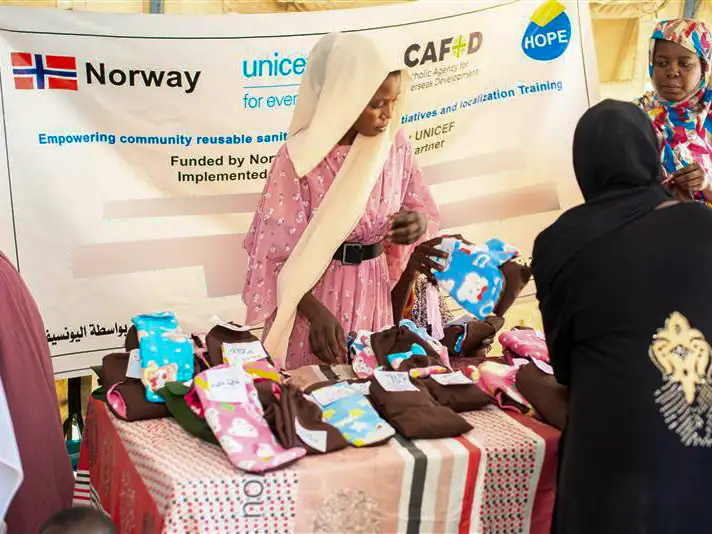
We’re urging the Foreign Secretary to take action to end the suffering in Sudan.

We ask the Lord to open the paths of peace as we pray for the people of Sudan who are facing conflict and hunger.
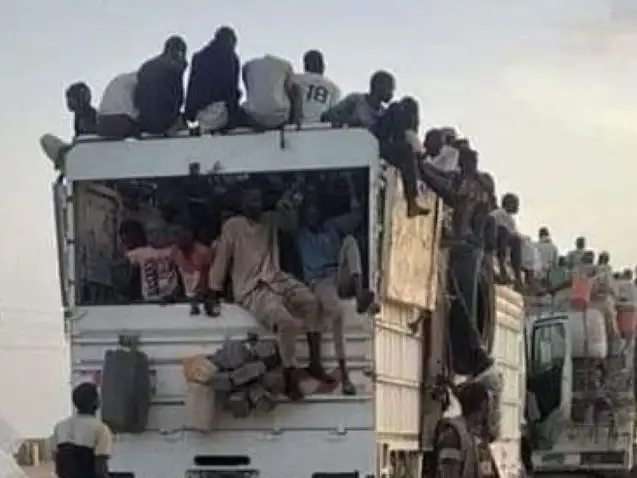
Hold a collection or fundraiser in your parish to get urgent support to families affected by the crisis in Sudan.