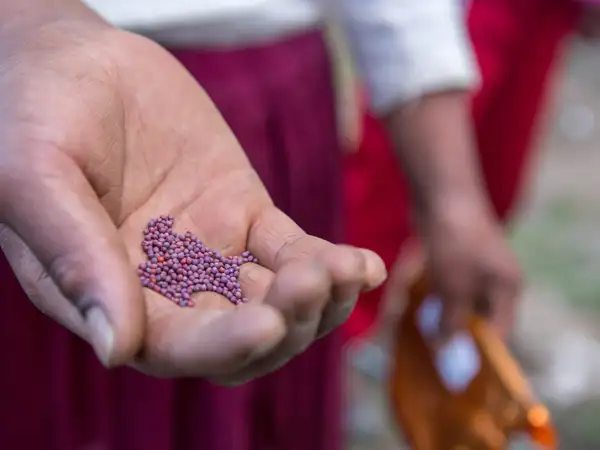
For the past two years CAFOD supporters have been calling on the World Bank to stop pushing countries to enforce new seed laws. These laws include restrictions on small-scale farmers’ rights to save, share and sell their seeds.
Your parish might have been one of the 700 who supported last year’s letter from Salina - a small-scale farmer from Bangladesh who wrote to the World Bank urging them to return seeds to the hands of farmers.
The World Bank has so far been receptive to our campaign. From their detailed responses to our letters, and meetings with CAFOD staff and supporters, through to engaging in a public discussion with CAFOD partners, we are reassured that the World Bank is listening to us.
Yet still the change we so urgently need remains far from materialising.
One of many reasons you should continue to campaign is that, as our latest research reveals, this problem is too big and is affecting too many women for us to look away.
CAFOD and our partner BIBA-Kenya (Biodiversity and Biosafety Association Kenya) recently conducted research into how Kenya’s 2012 seed law has impacted women, who constitute up to 80% of Kenya’s agricultural labour force.
This law is similar to those promoted by the World Bank and is designed to regulate and strengthen the commercial seed sector. By examining the impacts of Kenya’s seed law, we can gain insight into how the World Bank’s programmes are likely to affect millions of women farmers around the world.